
Bagpipes, the "auditory spotlight"
Acoustic guitars, cellos, and harps are great instruments for providing ongoing, background music. They can be played both indoors and outdoors and can adjust their volume to match the location and setting. From "pianissimo" to "fortissimo", these instruments have a dynamic range that makes them quite versatile and 'blend into the background' when needed.
Bagpipes on the other hand have a single volume much louder than guitars and strings. Not only does the volume impact how long they should be played (especially for indoor locations), but the sound also naturally draws guests' attention. For that reason, it's important to be strategic in how the bagpipes can be used at your event. Think of them as your "auditory spotlight".
This means that at weddings, the bride should not have to compete with the bagpipes for attention. If the bagpiper and bride are at opposite ends of the aisle - should the bagpiper play? Or should the bagpiper be part of the processional so the bride can be the sole center of attention?
For wedding receptions - bagpipes are a great way of announcing the newlyweds with a grand entrance, but does it lose some of the effect if the bagpipes continue to provide 'background' music?
At memorials, bagpipes are particularly good at "book-ending" the service. They can play at the beginning to set the tone for the service and again at the end as a final send off without drawing attention away from the friends and family gathered.
If playing as guests are arriving to a party, should the piper play at the valet stand or does it make more sense to have the music closer to where people are gathering? Are guests arriving as a single group or within a relatively short span, or are arrivals staggered over 45 minutes?
While each event is different, using the bagpipes strategically can help ensure the bagpipes delight your guests and don't inadvertently draw attention away. If you have any questions on how you can better utilize this "spotlight" for your event, please let me know!
Building a Brand
Those who've followed "Piper Jonas" over the years might recognize some major changes. While all brands undergo some natural evolution, there are also times when a more dramatic 'refresh' takes place. Somewhat poetically, the Piper Jonas brand has grown and developed in parallel with my bagpiping skills and experiences.
In the last year, however, I've devoted more attention to creating a separate brand identity. In the past there has been a bit of co-branding - layering Piper Jonas over the branding of the band I was affiliated with at the time - including several different band kilts and other uniforming pieces. But this "refresh" is meant to create a distinct look wholly unto Piper Jonas.
Embroidery example of custom logo
Some of these components have already been rolled out including the logo, website, and collateral, but more is still to come. The next major focus will be on uniforming and "onsite" presence. I've taken a first step in designing and ordering a custom bagpipe bag cover from highlandgear.ca who are the same bag cover makers for Simon Fraser University (SFU) Pipe Band, St. Laurence O'Toole (SLOT) Pipe Band, and Inveraray and District Pipe Band. For those not familiar with the World Pipe Band Championships held in Glasgow, Scotland each year - these bands combined have won the Grade I Championships seven times and tally twenty-one 2nd and 3rd placing trophies over the last 32 years.
Douglas Modern Blue tartan
Following the bagpipe bag cover, I will also be updating my uniform from head to toe to match the color scheme of a new kilt being made in Douglas Modern Blue tartan. The new uniform will draw on more of the navy blues highlighted with more royal blues and whites. In addition to the uniform, I will also be considering a new set of fully-engraved sterling silver bagpipes. I haven't decided on the bagpiper maker yet, but for any of my piping friends who have recommendations - I'd appreciate your input!
Most of the changes are planned to be completed before the 2018 season.
Carry on,
Piper Jonas
In Bagpiping: Always Choose Quality
"These are bagpipes. I understand the inventor of the bagpipes was inspired when he saw a man carrying an indignant, asthmatic pig under his arm. Unfortunately, the man-made sound never equalled the purity of the sound achieved by the pig." -Alfred Hitchcock
Whether Alfred Hitchcock's quote was meant as a joke or a comically earnest critique - his quote expresses an all too uncommon impression of bagpipe music. Over many years of playing the bagpipes, I must have run across every permutation of this "joke" (although most versions typically replace the pig with a cat).
While in the past I considered such jokes the result of either a sarcastic sense of humor or a futile attempt at conversation - now my perspective has completely changed. Instead of brushing off jokes or being annoyed, I've come to wonder: could it be they've never experienced truly great bagpipe music?
Now, I realize that I could be completely off - but maybe, just maybe if they heard a concert performance by any of the top performers of our time - would they still reuse the same jokes? Having been fortunate enough to attend such events myself I can attest to how a live performance can place the instrument in a different light. Maybe their only interaction with the bagpipes was a beginner practicing in a park outside their house or they attended an event where the drones double-toned and the notes of the chanter all played too sharp.
That's why when playing I'm cognizant that for some in the audience my performance could be that first impression.
In the bidding process, service rates (quantity) are oftentimes weighted more heavily than skill level or experience (quality). Here are some other points to consider:
- Does the piper have a successful competition background? Competition generally leads to better playing
- Does the piper have leadership experience within a pipe band? Leadership positions typically denote they're within the top percentile of performers in the band
- Years of playing doesn't necessarily mean a better player - it depends on whether those years are spent actively improving
As in most cases - especially in the service industry - the adage of "you get what you pay for" still holds true. Sure, one might still get that 'memorable' performance, but maybe not in the way they expect! So when it comes time to consider hiring a bagpiper - always choose quality whenever possible.
Just as Alfred Hitchcock said bagpipes were less pleasing than squealing pig - I can't help but wonder if Mr. Hitchcock had had an opportunity to listen to Stuart Liddell, Jack Lee, or any of a number of world-class pipers - would he have found the bagpipes more praiseworthy?
Paying the Piper
"He who pays the piper calls the tune"
Eliminating obstacles in the payment process can not only make for a much better experience from the client’s perspective, but can also make a huge difference in cash flow for the piper. While each performer has a slightly different approach and method to collecting on a gig, here are several things to consider:
Timing
Deposits are typically recommended for piping gigs. Not only do they help solidify the contract between client and performer, but also provide some liquidity for costs that the arise prior to the event, such as gas, uniform cleaning, equipment repairs, etc. I usually ask that events booked a month or more in advance pay 30-50% of the total quote as a deposit although other pipers choose to use a flat fee for the deposit. For short-notice events inside of a month (especially funerals), I usually waive the deposit — opting to have the client pay in full on the day — as it tends to make the process easier on both parties.
Methods
The rule of thumb is to allow the client to pay by whatever method works best for them. This means that the days of the cash-only method are gone. Not only does expanding available methods to include credit and debit cards, PayPal, or other “FinTech” platforms sometimes more convenient for the client, but they also improve cashflow and can be easier to track for reporting purposes.
I mentioned in my Tools for Bagpiping Gigs post about how I use Invoice2go to handle both card payments and record keeping, but other services are available too. Especially if the client wants to pay by card on the day of the event — having a handheld payment system like PayPal Here or Square can mean the difference between getting paid on the spot or waiting for a check in the mail a week later.
While I haven’t been asked yet to be paid by Bitcoin, it might be worthwhile to start looking should the need arise.
Flexibility
After talking about the merits of card and electronic payments — there is the drawback that typically all transactions will incur a processing fee. While new users usually enjoy a promotional period where the processing fee is waived, the transaction costs eventually creep into any digital payment method. If you are wary about paying fees, you may consider extending the payment period or offering a small discount if the client pays by cash or check.
Tipping
Tipping isn’t too common an occurrence for bagpipe gigs, but if you are fortunate enough to get a little extra - be sure sent a special ‘thank you’ email or card!
Pipe on friends,
Piper Jonas
The "Gigmaster's Toolkit"
Requests for bagpipers aren’t as uncommon as one might think. Even if you haven’t had a bagpiper play for your special occasion — bagpipers are frequently asked to play for weddings, funerals, birthday parties, family reunions, graduations, parades, golf tournaments, and many more events.
In fact, bagpipers who actively advertise can get twelve or more leads per month (with wedding season being especially busy!)
A high volume of both leads and bookings brings new challenges in the form of administrative tasks. Any piper who has experienced a surge in leads knows just how quickly the process can become unmanageable.
At the same time — it’s critical to track payments, mileage, and scheduling for reporting purposes. Especially now during tax season — good reporting can mean the difference between a sizable deduction or leaving money on the table. More good news — the costs associated with
Since I began playing gigs, I’ve tested different methods and tools to reduce the time spent on tracking while also being flexible and scalable. After all -- no matter how much time I spend on paperwork and ‘back office' activities, I'm only getting paid when I'm actually playing the bagpipes. What I’ve developed is a system that manages the process end-to-end with minimal effort with the added bonus of giving my service a polished, professional look. I'd like to share three of those tools that have some of the biggest impact:
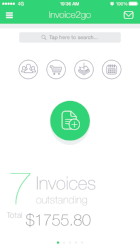
Payments: Invoice2go
Getting paid is the end goal, so making that process as seamless as possible is key. Invoice2go is the perfect solution for knowing who has paid and who is outstanding, but now with their payments feature — also gives your clients flexibility to pay by card or PayPal. This means deposits can be directly deposited into your bank account and eliminates the need for sending checks through the mail. Their Starter Plan starts at $19/yr. and is good for up to 50 invoices. I personally use the $99/yr. Pro Plan which includes unlimited invoices.
Disclaimer: as a former employee of Invoice2go I do own limited equity. My relationship is now that of a customer and I do not receive any form of compensation for my use and recommendation.
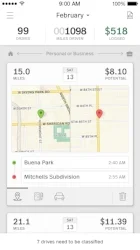
Mileage Tracking: MileIQ
Driving to and from events is a tax deductible expense, but is there a more tedious and cumbersome task than tracking mileage? Enter MileIQ — an app that tracks the mileage for you as soon as you get in the car. The free version comes with 40 drives/month which should suit most pipers, but even their unlimited plan is $5.99/mo. For 20% off their unlimited plan, you can sign up here.
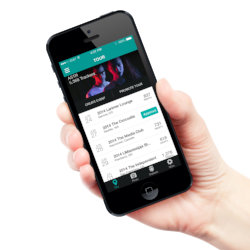
Scheduling: Bandsintown, Squarespace
Before a prospective client even contacts me, it's helpful if they know what dates I have available. A list of booked gigs also connotes experience and can act as a trust factor — assuring the client that you’re not a fly by night operation. The Bandsintown Manager is a great free app that might’ve been designed for popular, traveling bands, but works well for chronicling bagpiping events. Truth be told it’s not a perfect tool as it has limited customization — such as the inability to remove the RSVP message from a listing (who would attend a stranger's private memorial?) — but that aside, it serves it’s purpose well. I’ve included Squarespace in this category as the website builder has a seamless integration with Bandsintown, so an update to the Bandsintown Manager app shows up on my website in a matter of seconds. If you want to take a look - here’s the page. Super simple.
Squarespace itself is an incredible service with website templates that can be customized with little to no web development experience. Pricing is also straightforward at $12/mo. for a simple website.
Whether you’re new to booking gigs or a seasoned veteran — I hope these tools can help your process and free up your time to focus on practicing! Don’t forget that these tools might also be deductible on tax returns as well.
What tools have you tried? Any standout tools or apps that should be mentioned here?
Piper Jonas